




Reference check
A reference check provides greater confidence in hiring decisions and helps companies make informed recruitment choices. As part of the reference check, a candidate’s work history, performance, and professional behavior are reliably verified.
CVs can be embellished or incomplete. A structured reference check brings clarity, not from a place of mistrust, but as a foundation for well-informed hiring decisions.
By conducting structured and GDPR-compliant reference checks, companies can reduce risks such as compliance issues while identifying the right talent.



What is verified during a reference check?
A reference check covers various job-related aspects to build a comprehensive picture of the candidate.
- Employment details and responsibilities: Verification of employment periods, job titles, and specific responsibilities to confirm the information provided in the CV.
- Performance, skills, and competencies: Assessment of work quality, professional skills, and past achievements to evaluate suitability for the role.
- Collaboration and professional behaviour: Insights into teamwork, communication skills, and overall professionalism in the workplace.
- Reasons for leaving: Understanding the context behind job changes to better assess career development.
- Strengths and areas for development: Identification of key strengths as well as potential areas for growth.
All information collected is strictly job-related and gathered in compliance with applicable data protection regulations, particularly the GDPR.

Reference check: Thorough, structured, and reliable
DISA conducts reference checks using a structured and consistent methodology. Standardised questions ensure fair and comparable evaluations across all candidates.
Reference contacts are typically former supervisors or direct managers who can provide informed insights into a candidate’s performance and work behaviour. All findings are documented objectively to ensure a transparent basis for decision-making.
A reference check is typically completed within three to seven business days. Throughout the process, DISA places strong emphasis on professional and respectful communication with all parties involved.

Reference checks in line with German data protection and compliance standards
At DISA, every reference check is conducted in full compliance with the General Data Protection Regulation (GDPR). Written consent from the candidate is obtained before any reference is contacted.
Reference providers are clearly informed about the purpose and scope of the check. Only necessary and job-relevant information is collected.
All data is processed securely and stored within the EU. Protecting the privacy of both candidates and reference providers is a top priority at all times.
How a reference check works
The reference check process at DISA follows a clearly structured approach that combines thoroughness with efficiency.
- Consent and reference details: The process begins with obtaining written consent from the candidate and collecting relevant contact details of reference providers.
- Contacting references: DISA reaches out to references using a standardised questionnaire to initiate the process.
- Structured approach: All responses are based on predefined, standardised questions to ensure consistency and comparability.
- Documentation of findings: All responses and insights are carefully and objectively documented.
- Comprehensive reporting: Companies receive a structured and detailed report to support their hiring decisions.
The entire process is designed to be efficient while delivering reliable results without compromising on quality.
Why conduct reference checks with DISA?

Proven expertise
With over 25 years of experience in employment screening, DISA uses proven methodologies and structured approaches to deliver reliable results.

Secure and GDPR-compliant
All processes meet GDPR requirements. Consent is documented and data is handled securely.

Efficient support for HR
From initial contact to final report, DISA manages the entire process, saving valuable time while ensuring consistency and professionalism.
Why employment screening is becoming increasingly important in recruitment
Reference checks are a key component of employment screening. They help organisations comprehensively verify candidate information and make informed hiring decisions.
The focus is on careful and thorough evaluation, not mistrust. By combining reference checks with identity verification, qualification checks, and employment history validation, organisations gain a complete picture of the candidate.
This reduces hiring risks and significantly improves the quality of recruitment decisions. DISA supports organisations throughout the entire employment screening process with efficient and structured workflows.
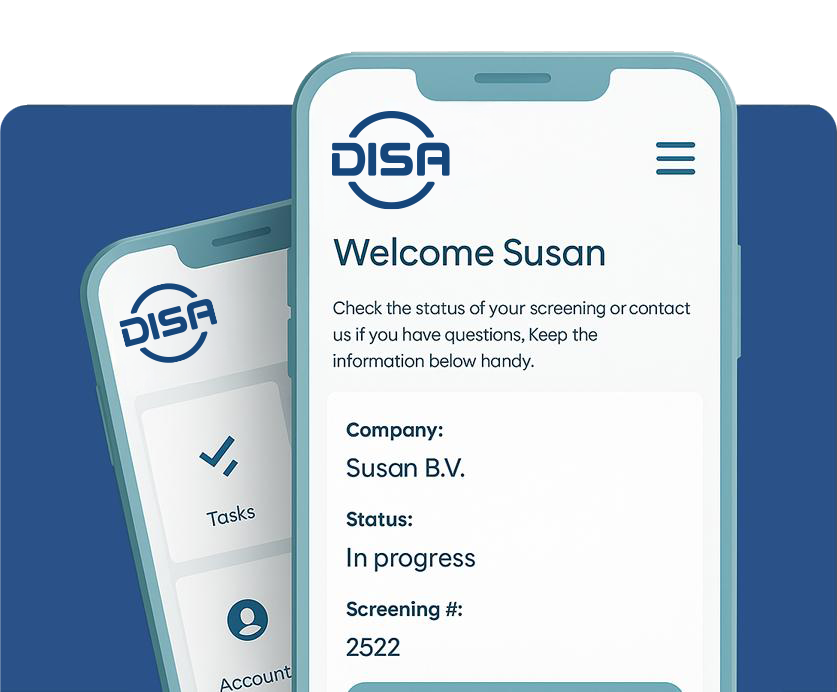
Request a free presentation
Would you like to learn more about employee screening software? Contact us to arrange a no-obligation presentation.
Frequently asked questions (FAQ) about reference checks
Reference checks involve structured, job-relevant questions designed to provide a comprehensive view of the candidate. These include employment details such as duration, role, and responsibilities. In addition, performance, reliability, and soft skills like teamwork and communication are assessed. Reasons for leaving as well as strengths and development areas may also be discussed.
A reference check typically takes between three and seven business days. The timeline depends largely on the availability of reference providers. Thanks to structured processes, DISA ensures an efficient yet thorough approach. Results are delivered promptly in a clear and structured report.
References are usually former supervisors or direct managers who can best assess a candidate’s performance and behavior. It is important that reference providers can offer informed and objective insights. The selection is made in coordination with the candidate.
Yes, reference checks can be conducted in full compliance with GDPR. Written candidate consent is required before contacting references. Only necessary and job-relevant information is collected. All data is processed securely and stored within the EU.
A single negative reference does not automatically result in a negative overall assessment. All information is evaluated in context to provide a balanced and objective view of the candidate. The goal is to support well-informed decision-making rather than draw premature conclusions.