




Adjudication check
Simple and efficient certainty from screening results
A screening process is often seen as complex and time consuming. Due to different laws, regulations, backgrounds and entities, inconsistent decision making can lead to errors in hiring and integrity risks.
With the Adjudication check, your organisation can assess candidates more efficiently using predefined criteria that are determined in advance. This streamlines your screening process.




Why choose the Adjudication check via DISA?
- Efficiency: Irrelevant information is immediately removed from your screening results.
- Less manual review: (Minor) discrepancies that fall within the accepted tolerance of a client’s screening policy are handled efficiently, reducing the number of reports requiring additional review and enabling candidates to progress more quickly.
- Cost reduction: By saving time for your staff and candidates when reviewing discrepancies in a screening report, you reduce costs.
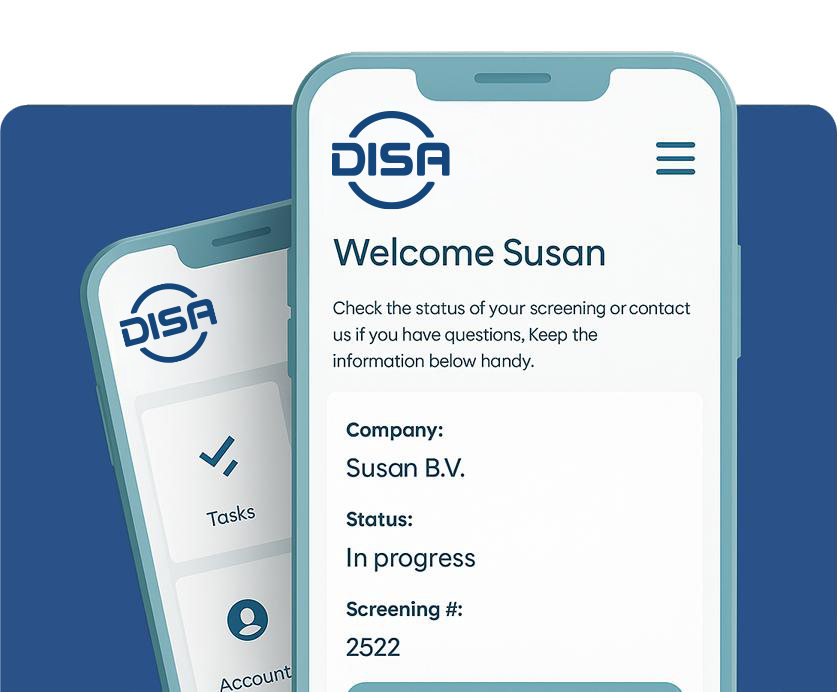
Request a free demo!
Would you like to know more about the employment screening software? Get in touch to schedule a free demo.
Frequently Asked Questions about the Adjudication Check
No, an Adjudication Check is not legally required in the Netherlands.
It is an additional assessment step organisations can use to review screening results in a careful and efficient manner.
The Adjudication Check is performed by the screening provider on behalf of the employer. The final hiring decision always remains with the employer.
It is important that the assessment criteria are clearly defined in advance. This helps ensure the process remains objective, transparent and aligned with privacy legislation.
Yes, the candidate receives access to the final assessment through the screening report. All evaluations and findings are included in the report.
An Adjudication Check can apply to different types of checks. Common examples include minor discrepancies in employment history or small differences in graduation dates provided by the candidate.
Handling these types of minor discrepancies through an adjudication process significantly reduces the number of reports requiring additional manual review. This helps accelerate the onboarding process.