




 31 August, 2026
From false application to security risk
A fraudulent attempt can begin as early as the application stage and continue throughout the recruitment process. The longer it goes undetected, the greater the potential consequences for the organisation.
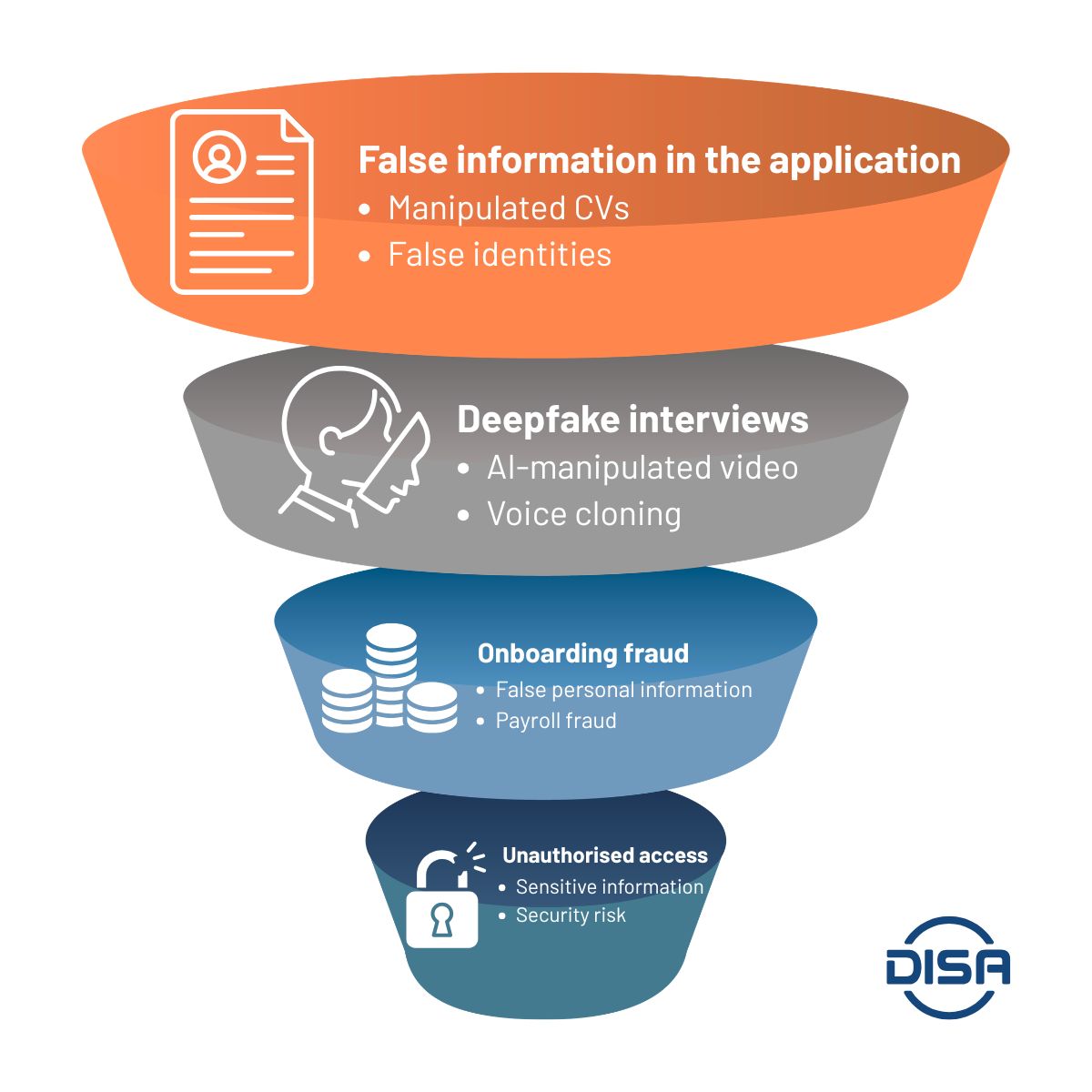

How can a fake candidate make it through an entire recruitment process?
The idea that someone could be hired under a false identity may sound unlikely, particularly when the recruitment process involves several interviews. But when recruitment, interviews and work all take place remotely, there are situations where it can be more difficult to establish who is actually on the other side of the screen.
Imagine you are recruiting a developer for a fully remote role. The candidate completes the interviews, gets the job and starts delivering as expected. But in reality, some or all of the work is being carried out by someone else, while communication with the employer continues under the employee’s identity.
There is also a great deal of information about us already available online. Details about education, previous employers and professional experience can often be found on platforms such as LinkedIn. With the help of AI, this information can be used to build a convincing fake candidate profile. The information may be genuine – but belong to someone else.
In more serious cases, securing the job itself may be a way to gain access to the organisation’s systems, information or other assets. What starts as recruitment fraud can then develop into a security risk for the entire organisation.
How can AI be used to deceive employers?
AI can be used to deceive employers at several stages of the recruitment process, from the initial application through to interviews and onboarding.
AI can be used to create convincing but false information about previous employment, education, skills and experience. This can also include fabricated work samples, portfolios or references.
Candidates can use AI in real time to generate answers to interview questions or receive assistance during technical assessments, for example. This can make it more difficult to determine what knowledge and experience the candidate actually has.
AI can be used to manipulate video or audio during a digital interview. This could allow someone to impersonate another person or conceal who is actually taking part in the interview.
A candidate may use false or stolen identity information alongside AI-generated content to create a convincing candidate profile. The question is then no longer simply whether the information in the CV is accurate, but whether the employer is actually dealing with the person they believe they are.
In international research, the term phantom candidates is used to describe a more advanced form of recruitment fraud in which AI is used to create a false candidate persona. The objective may not simply be to secure a job, but to gain access to an organisation’s systems, information or other assets.

How can background checks help?
As AI makes it easier to create false identities, credentials and candidate profiles, verifying the information behind an application becomes even more important. Background checks can help employers establish both who the candidate is and whether the information they provide is accurate.
The appropriate checks should reflect the role and the risks involved. An employee with access to sensitive personal data, financial systems or source code may present different risks from someone with limited access.

Start by verifying the candidate’s identity
As part of an identity check, the candidate verifies their identity digitally through our secure platform by photographing their passport, national ID card or residence permit.
The identity document is verified with the support of our partner Mitek. The document’s authenticity and validity are checked, as well as whether it has been reported lost or stolen.
If something cannot be verified automatically, the case is referred to one of our screening consultants for review. If the review identifies information that does not match, this is reported as a discrepancy in the screening report.
The identity check can also be supplemented with digital identity verification using facial recognition, matching the candidate against the photograph on their identity document. This helps verify not only that the document is genuine, but also that it belongs to the person completing the check.
Verify the candidate’s background
Once the candidate’s identity has been verified, relevant background checks can be used to confirm that the information they have provided is accurate and identify any discrepancies.
- Employment history and references
We verify details such as previous employers, job titles and periods of employment, and can supplement this with reference checks.
- Education and qualifications
We verify the candidate’s education and qualification details with educational institutions.
- Criminal record
Where permitted and relevant to the role, criminal offence data can provide important information as part of the overall assessment of the candidate.

Do you have questions about background checks?
Would you like to know how background checks can help you verify candidates and create a more secure recruitment process? Fill in the form and one of our specialists will get in touch.